
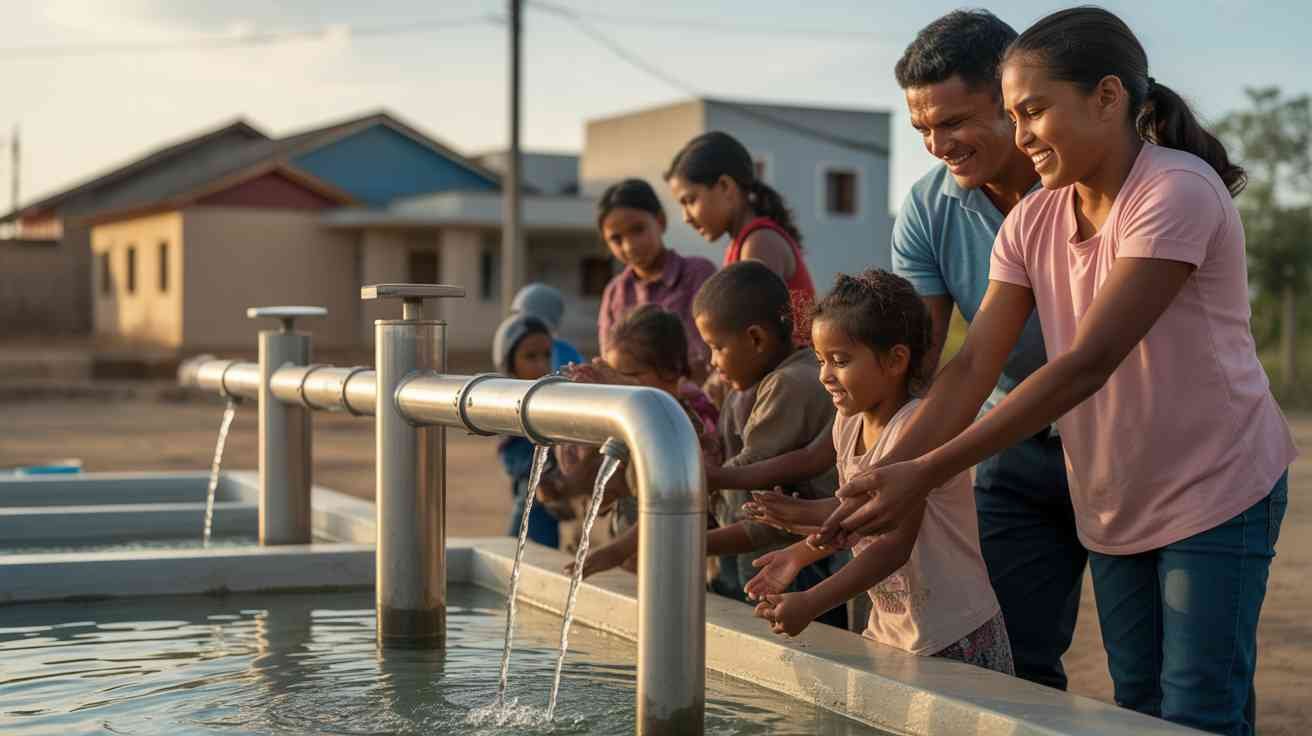
Imagine waking up each morning to the sound of running water, the scent of fresh soap, and the comfort of knowing your family is safe from waterborne diseases. This isn’t just a luxury – it’s a fundamental human right. Yet, for millions around the world, this remains a distant dream. The urgency to improve community access to safe drinking water and sanitation facilities has never been more critical. Without immediate action, we risk perpetuating cycles of poverty, disease, and inequality. The time to act is now, and the consequences of inaction are dire.
The Global Water Crisis: An Urgent Call to Action
Every day, approximately 1.4 million people die from diseases linked to unsafe water, poor sanitation, and inadequate hygiene. These are not just statistics; they represent mothers, children, and communities whose lives are cut short due to preventable causes. The World Health Organization reports that improving access to water, sanitation, and hygiene could save 1.4 million lives per year. Yet, despite this knowledge, progress remains sluggish, and millions continue to suffer in silence. The window of opportunity to reverse this trend is closing rapidly. If we do not act decisively, the consequences will be irreversible.
Community-Led Initiatives: Empowering Local Solutions
Top-down approaches often fail to address the unique needs of communities. Empowering local populations to take charge of their water and sanitation solutions has proven to be more effective. Organizations like Gram Vikas have demonstrated that when communities are involved in building and managing their own water systems, sustainability increases, and health outcomes improve. These community-led initiatives not only provide immediate relief but also foster a sense of ownership and responsibility, ensuring long-term success. However, without widespread adoption of this model, many communities will continue to face inadequate access to safe water and sanitation.
Innovative Technologies: Bridging the Gap
Technological advancements offer promising solutions to the water crisis. For instance, the Sato Tap, a low-cost handwashing device, enables communities to practice hygiene with minimal water usage. Similarly, IoT-based water quality monitoring systems are being deployed in off-grid communities to detect contamination in real-time, allowing for swift interventions. These innovations are game-changers, but they require investment, infrastructure, and political will to scale. Without these elements, such technologies will remain inaccessible to those who need them most, perpetuating the cycle of water insecurity.
Education and Awareness: Changing Behaviors for Better Health
Access to information is just as crucial as access to water. Hygiene education plays a pivotal role in preventing waterborne diseases. Simple practices like handwashing with soap can reduce diarrhea cases by up to 35%. Yet, in many communities, these practices are not the norm due to a lack of awareness. Educational campaigns that teach the importance of sanitation and hygiene can lead to significant improvements in public health. However, without sustained efforts to educate and engage communities, these behaviors will not change, and the burden of disease will persist.
Infrastructure Development: Building for the Future
Investing in infrastructure is essential for providing safe drinking water and sanitation facilities. This includes constructing wells, pipelines, and sewage treatment plants. However, infrastructure alone is not enough. It must be accompanied by proper maintenance, management, and community involvement to ensure its effectiveness. Without these components, even the most well-intentioned projects can fail, leaving communities without the resources they need to thrive.
Policy and Governance: Creating an Enabling Environment
Effective policies and strong governance structures are critical for addressing the water and sanitation crisis. Governments must prioritize water and sanitation in their development agendas, allocate sufficient resources, and ensure accountability. International frameworks like the United Nations Sustainable Development Goal 6 aim to ensure availability and sustainable management of water and sanitation for all by 2030. However, achieving these targets requires political commitment, transparency, and collaboration across sectors. Without these elements, progress will remain elusive, and the gap between those with and without access to safe water will continue to widen.
Climate Change and Water Security: A Growing Threat
Climate change exacerbates existing water challenges. Rising temperatures, changing precipitation patterns, and extreme weather events are affecting water availability and quality. Communities that already lack access to safe water are the most vulnerable to these changes. Adaptation strategies, such as rainwater harvesting and water-efficient technologies, are essential to mitigate the impacts of climate change on water resources. However, without global cooperation and urgent action, these strategies will not be enough to offset the growing threats to water security.
Call to Action: Your Role in the Solution
The water and sanitation crisis is not someone else’s problem – it’s ours. Each of us has a role to play in ensuring that everyone has access to safe drinking water and sanitation facilities. Whether it’s advocating for policy change, supporting organizations working on the ground, or making sustainable choices in our daily lives, our collective actions can make a difference. The time to act is now. The longer we wait, the more lives are lost, and the harder it becomes to reverse the damage. Join the movement for clean water and sanitation. Together, we can create a world where everyone has the opportunity to thrive.