In the fast-evolving world of higher education, where every semester brings new challenges and opportunities, one thing is clear: the future of STEM education is unfolding right now. Universities worldwide are embracing a transformative wave of innovation, integrating virtual labs and technology-supported learning to revolutionize how students engage with science, technology, engineering, and mathematics. This isn’t just a trend – it’s a seismic shift that promises to redefine educational experiences, making them more immersive, accessible, and effective than ever before.
The Dawn of a New Era in STEM Education
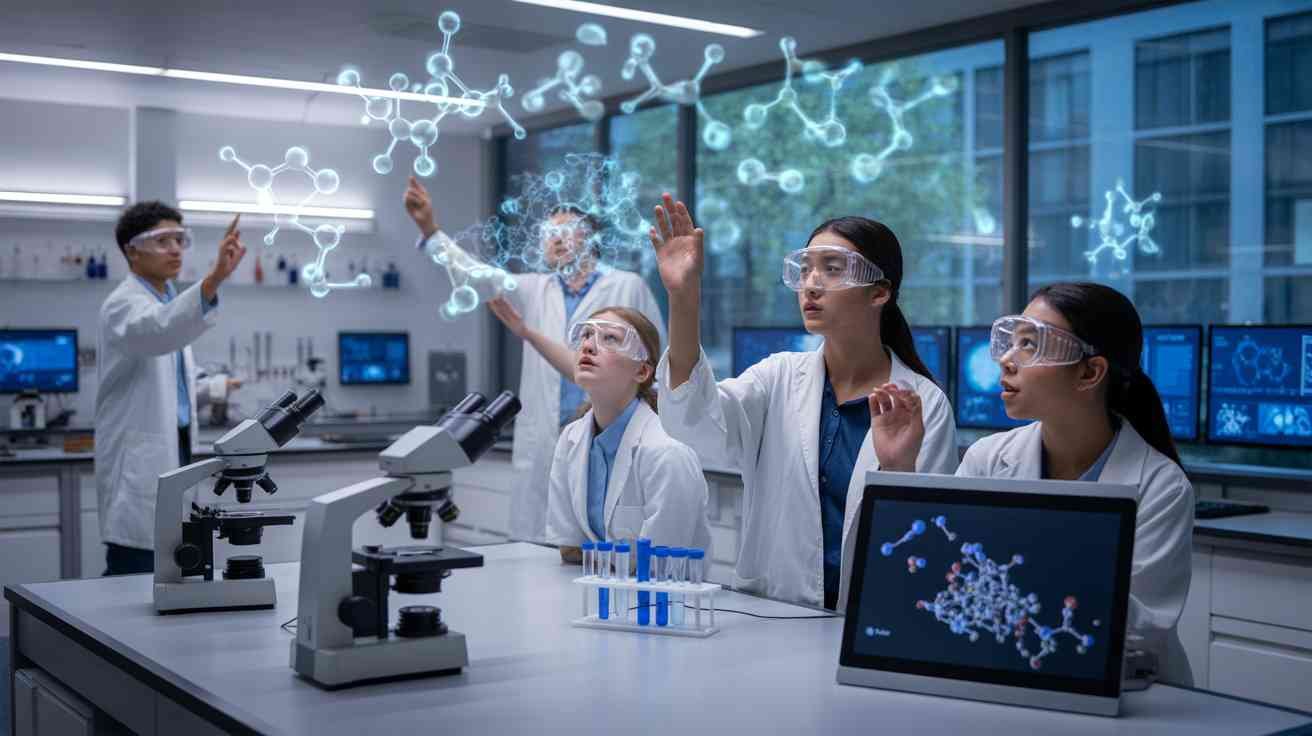
Imagine stepping into a state-of-the-art laboratory without leaving your home. Picture yourself conducting complex experiments, manipulating intricate instruments, and analyzing data, all within a virtual environment that mirrors reality. This is the power of virtual labs – a game-changer in STEM education. By eliminating the constraints of physical space and resources, virtual labs offer students the freedom to explore, experiment, and learn at their own pace. Whether it’s simulating chemical reactions, dissecting virtual organisms, or constructing engineering models, the possibilities are limitless.
But the impact doesn’t stop there. Technology-supported learning platforms are enhancing the virtual lab experience by providing interactive tutorials, real-time feedback, and collaborative tools. These platforms foster a dynamic learning environment where students can engage with content in multifaceted ways, deepening their understanding and retention. The integration of multimedia resources, such as videos, simulations, and quizzes, caters to diverse learning styles, ensuring that every student has the opportunity to succeed.
Breaking Down Barriers: Accessibility and Inclusivity
One of the most compelling advantages of virtual labs is their ability to break down barriers to education. Students from remote areas, those with physical disabilities, or individuals facing financial constraints often find it challenging to access traditional laboratory facilities. Virtual labs level the playing field by providing equitable access to high-quality educational experiences. A notable example is the ViLEG (Virtual Laboratory Experiments for Graduates) initiative developed by a professor at the National Institute of Science Education and Research (NISER). This software empowers rural students to conduct sophisticated STEM experiments virtually, bridging the educational divide and fostering inclusivity in science education.
Furthermore, virtual labs offer flexible learning schedules, allowing students to engage with content at times that suit them best. This flexibility is particularly beneficial for working professionals or those balancing multiple commitments. The ability to revisit experiments, replay simulations, and access resources on-demand enhances the learning experience, making education more adaptable and student-centered.
Enhancing Clinical Education Through Virtual Simulations
In the realm of clinical education, virtual labs are proving to be indispensable. Medical and healthcare programs are increasingly incorporating virtual simulations to provide students with hands-on experience in a controlled, risk-free environment. These simulations allow learners to practice procedures, diagnose conditions, and interact with virtual patients, honing their skills before applying them in real-world settings. Institutions like the University of Edinburgh have pioneered this approach, offering comprehensive virtual learning environments that support clinical training and assessment.
The benefits extend beyond skill development. Virtual simulations enable students to encounter a wide range of scenarios, including rare or complex cases that might not be present in traditional clinical settings. This exposure broadens their clinical knowledge and prepares them for diverse challenges in their professional careers. Additionally, these simulations provide immediate feedback, allowing students to reflect on their performance and make necessary improvements, thereby accelerating their learning curve.
Real-World Applications: Success Stories from Leading Institutions
Across the globe, universities are witnessing the transformative impact of virtual labs and technology-supported learning. At Purdue University, virtual labs are enhancing the quality of engineering education by providing students with interactive experiences that deepen their understanding of course material. These labs serve as pre-work for students to complete before attending in-class physical labs, allowing them ample opportunity to practice experiments and understand concepts and safety procedures beforehand, thus increasing the efficiency of both students and instructors.
Similarly, Iowa State University and Drake University have adopted virtual dissection tables to enhance anatomy education. These digital systems provide interactive, life-size representations of body parts, allowing students to closely examine layers and compare differences in anatomies. The integration of such technology has significantly improved the quality of anatomy education, offering students a more engaging and comprehensive learning experience.
Cost-Effectiveness and Resource Optimization
Traditional laboratory setups often require significant investment in equipment, maintenance, and consumables. Virtual labs, on the other hand, offer a cost-effective alternative by reducing the need for physical resources. This not only lowers expenses for educational institutions but also minimizes the environmental impact associated with manufacturing and disposing of laboratory materials. The funds saved can be redirected towards enhancing other aspects of the educational experience, such as faculty development, research initiatives, or student support services.
Moreover, virtual labs facilitate resource optimization by allowing multiple students to access the same lab simultaneously, regardless of their geographical location. This scalability ensures that all students have equal opportunities to engage with the learning material, maximizing the utilization of available resources and enhancing the overall efficiency of the educational system.
Preparing Students for the Future Workforce
In today’s rapidly evolving job market, employers seek candidates who possess not only theoretical knowledge but also practical skills and problem-solving abilities. Virtual labs equip students with these competencies by providing them with opportunities to apply their learning in realistic scenarios. Whether it’s troubleshooting engineering designs, analyzing data sets, or diagnosing medical conditions, students develop critical thinking and analytical skills that are highly valued in the workforce.
Furthermore, the technological proficiency gained through virtual lab experiences prepares students for careers in industries that rely heavily on digital tools and platforms. As technology continues to advance, the demand for professionals with expertise in virtual environments and simulations is expected to grow, making virtual labs an essential component of modern education.
Challenges and Considerations
While the benefits of virtual labs are undeniable, their implementation comes with certain challenges. Ensuring equitable access to the necessary technology is paramount; students must have reliable internet connections and compatible devices to fully engage with virtual lab platforms. Educational institutions must invest in infrastructure and provide support to students who may face technological barriers.
Additionally, instructors need to be adequately trained to effectively integrate virtual labs into their teaching practices. This includes understanding how to design engaging virtual experiments, interpret simulation data, and provide meaningful feedback to students. Professional development opportunities and resources should be made available to faculty to facilitate this transition.
The Future of STEM Education: Embracing Innovation
The integration of virtual labs and technology-supported learning represents a paradigm shift in STEM education. As technology continues to advance, the potential for more immersive, interactive, and personalized learning experiences expands. Augmented reality (AR), artificial intelligence (AI), and machine learning are poised to further enhance virtual lab environments, offering students even more sophisticated tools and simulations.
Educational institutions must embrace these innovations to stay at the forefront of academic excellence. By investing in cutting-edge technologies and fostering a culture of continuous improvement, universities can provide students with the skills and knowledge necessary to thrive in an increasingly complex and digital world. The future of STEM education is here, and it’s virtual, dynamic, and full of possibilities.