
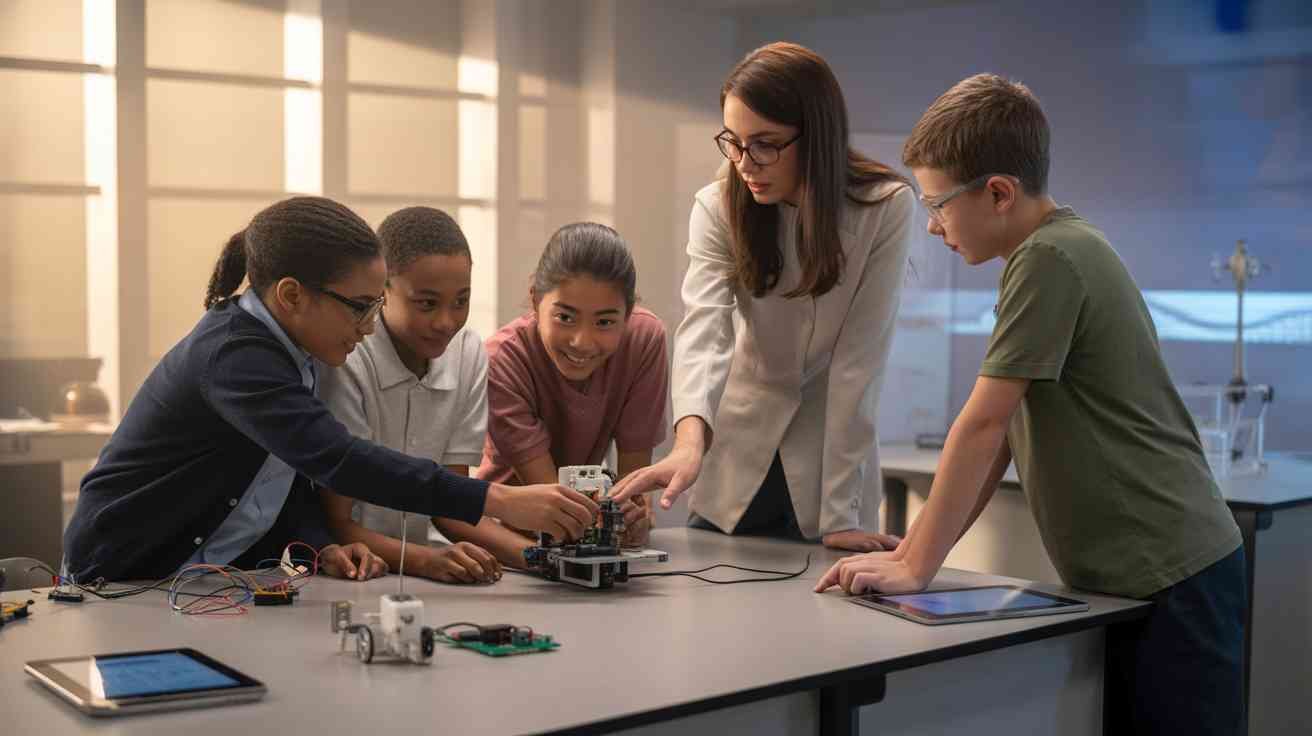
In today’s rapidly evolving educational landscape, the pressure to innovate and engage students has never been more intense. Teachers are not just educators; they are architects of future thinkers, problem-solvers, and innovators. The urgency is palpable: without fostering creativity in the classroom, we risk preparing students for a world that no longer exists. STEM challenges are not merely activities; they are gateways to a future where students don’t just learn – they create, innovate, and lead. The clock is ticking, and the opportunity to ignite this transformation is now.
The Power of STEM Challenges in Sparking Creativity
Imagine a classroom where students are not passive recipients of information but active participants in their learning journey. STEM challenges provide the perfect platform for this transformation. These challenges immerse students in real-world problems, demanding innovative solutions that require critical thinking, collaboration, and creativity. The hands-on nature of STEM challenges makes learning tangible and exciting, breaking down the traditional barriers of textbook-based education. As students engage with these challenges, they don’t just learn about science, technology, engineering, and mathematics – they live it, breathe it, and shape it. This experiential learning fosters a deep understanding and a passion for discovery, setting the stage for lifelong learning and innovation.
Creating an Environment That Nurtures Innovation
The environment in which students learn plays a crucial role in fostering creativity. A classroom that is flexible, dynamic, and rich in resources encourages students to think outside the box. Incorporating elements like maker spaces, where students have access to various tools and materials, can significantly enhance their ability to innovate. These spaces act as incubators for ideas, allowing students to experiment, fail, and try again without fear of judgment. The freedom to explore and create in such an environment boosts confidence and cultivates a growth mindset, essential components of creative thinking. Teachers who design their classrooms with creativity in mind are not just teaching subjects – they are shaping the innovators of tomorrow.
Integrating Health Education into STEM Challenges
Incorporating health education into STEM challenges adds a layer of relevance and urgency to the learning experience. Health-related problems are among the most pressing issues of our time, and addressing them through STEM challenges makes the learning process more meaningful. For instance, students can design solutions for improving public health, such as creating devices to monitor health metrics or developing apps that promote healthy lifestyles. By tackling real-world health issues, students not only apply their STEM knowledge but also develop a sense of responsibility and empathy. This integration makes learning more impactful and aligns education with the pressing needs of society.
Collaborative Learning: The Heart of Creative Problem Solving
Creativity thrives in collaboration. STEM challenges that encourage teamwork allow students to pool their diverse skills and perspectives, leading to more innovative solutions. Working in groups teaches students how to communicate effectively, negotiate ideas, and synthesize different viewpoints. These collaborative experiences mirror the real-world scenarios they will encounter in their careers, where teamwork and collective problem-solving are essential. Teachers who facilitate such collaborative environments are not just teaching content – they are preparing students for the complexities of the modern world, where success often depends on the ability to work well with others.
Embracing Failure as a Stepping Stone to Innovation
In the pursuit of creativity, failure is not a setback but a stepping stone. STEM challenges provide students with the opportunity to experiment and fail in a supportive environment. This process teaches resilience and the importance of perseverance. When students understand that failure is a natural part of the learning process, they become more willing to take risks and think creatively. Teachers play a pivotal role in framing failure as a valuable learning experience, encouraging students to view challenges as opportunities for growth. This mindset shift is crucial for fostering a culture of innovation and continuous improvement.
Real-World Applications: Bridging the Gap Between Classroom and Career
One of the most compelling aspects of STEM challenges is their ability to connect classroom learning with real-world applications. When students work on projects that address actual problems, they see the relevance of their education and understand how their learning can make a difference. This connection enhances motivation and engagement, as students recognize the impact of their work. Moreover, these experiences equip students with practical skills and knowledge that are highly valued in the workforce, such as problem-solving, critical thinking, and technical proficiency. Teachers who integrate real-world applications into their STEM challenges are providing students with a competitive edge in their future careers.
Utilizing Technology to Enhance Creative Thinking
In today’s digital age, technology is a powerful tool for enhancing creative thinking. Incorporating digital tools and platforms into STEM challenges allows students to explore new possibilities and push the boundaries of their creativity. For example, using 3D modeling software enables students to design prototypes and visualize their ideas in ways that were previously unimaginable. Similarly, coding and programming introduce students to the world of digital innovation, where they can create solutions that are both functional and imaginative. Teachers who embrace technology in their STEM challenges are not just teaching students how to use tools – they are teaching them how to innovate and create in a digital world.
Assessing Creativity: Beyond Traditional Testing
Traditional assessments often fail to capture the full extent of a student’s creative abilities. To truly gauge creativity, teachers must employ assessment methods that recognize the process as well as the product. This includes evaluating students on their problem-solving approaches, their ability to collaborate, and their capacity to iterate and improve upon their ideas. Rubrics that focus on creativity, innovation, and critical thinking provide a more comprehensive picture of a student’s abilities. By adopting such assessment strategies, teachers can better support the development of creative thinking and ensure that students are recognized for their innovative contributions.
Call to Action: Transform Your Classroom Today
The time to act is now. The world is changing rapidly, and the need for creative thinkers has never been more urgent. Teachers have the power to shape the future by fostering creativity in their classrooms through STEM challenges. By creating an environment that nurtures innovation, integrating health education, encouraging collaboration, embracing failure, connecting learning to real-world applications, utilizing technology, and assessing creativity effectively, teachers can ignite the spark of creativity in their students. This is not just about teaching subjects; it’s about preparing students to be the innovators and problem-solvers of tomorrow. Don’t wait – start transforming your classroom today and be part of the movement that shapes the future.
As educators seek to equip students with essential skills for the future, the integration of STEM concepts across disciplines has become increasingly vital. By exploring innovative strategies that merge subjects, such as through leisure education, teachers can foster a more engaging and holistic learning environment.